

“When girls are educated, their countries become stronger and more prosperous.”
– Michelle Obama
In communities where basic amenities are scarce, education can become an uphill battle, particularly for young girls facing a natural yet stigmatised occurrence: menstruation. In regions like Malawi and Nigeria, where African Child Trust (ACT) operates, period poverty remains a significant barrier to girls’ education and empowerment.
Period poverty isn’t just about access to menstrual products, but is also about ensuring girls have the knowledge, resources, and support they need to manage their periods with dignity. Without adequate hygiene facilities and menstrual products, girls often miss school during their periods, perpetuating cycles of inequality and disadvantage. Therefore, the impact of period poverty extends far beyond the classroom. In many communities, girls who miss school during their periods are more likely to experience early marriage, adolescent pregnancy, and limited economic opportunities.
In Malawi, the issue of period poverty is compounded by a myriad of socio-economic challenges. According to UNICEF, only a fraction of girls’ transition from primary to secondary school, with many dropping out due to the challenges posed by inadequate hygiene facilities and lack of menstrual products. To address this pressing issue, ACT in partnership with the Girl Leadership Empowerment Programme (GILEP), launched the Ulemu Project. This pilot project is aimed at reducing dropout rates, improving academic performance, and empowering girls by providing comprehensive menstrual health education and support.
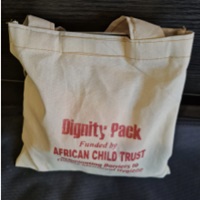
Dignity Pack
Through the Ulemu Project, girls received training on menstrual health hygiene, career planning and human rights awareness. Additionally, they were provided with ‘Dignity Packs’ containing reusable pads and underwear, items that were previously inaccessible to many. The resulting impact of this outreach was profound; school attendance among girls increased, dropout rates decreased, and academic performance improved significantly.
Similarly, in Nigeria’s Lagos State, our ‘Dignity For Girls’ project was extended to 1,500 girls across five secondary schools. Our workshops on menstrual health management and human rights awareness were well received. A similar positive outcome was observed as in Malawi, of increased attendance, decreased dropout rates and improved academic performance.
You can watch some testimonials from beneficiaries of the project here.
But our work is far from over. With your support, we can expand our efforts to reach more girls and communities in need. Together, we can break the silence surrounding the problems experienced by girls during menstruation, thereby empowering these girls to thrive in school and beyond, building a future where no girl is left behind.
Beyond providing menstrual products, we also run projects aimed to dismantle cultural taboos, challenge gender norms, and foster a supportive environment for girls’ education. We recognise that in order to achieve this, it is important that we engage with the boys as well. And so, we also run parallel workshops to engage them on the subject of gender equality and mutual respect, thereby laying the groundwork for more inclusive communities.
This we do through various initiatives, including our child sponsorship program. By covering the education costs of both disadvantaged or orphan boys and girls from primary school up to tertiary level education, we ensure that all children have equal access to education, regardless of gender. Furthermore, our advocacy efforts aim to raise awareness about the importance of menstrual health and hygiene, challenging stigma and fostering a more inclusive society for all.
But perhaps most importantly, our work is driven by the voices and experiences of the girls and communities we serve. Through participatory approaches, we empower girls to become agents of change in their own lives and communities, amplifying their voices and advocating for their rights.
As we reflect on the progress we’ve made and the challenges that lie ahead, we remain steadfast in our commitment to ending period poverty and ensuring every girl has the opportunity to fulfil her potential. Join us in our mission to break the silence, challenge stigma, and build a world where menstruation is no longer a barrier to education and empowerment.
Click here to donate and make a difference today.