

“No country can ever truly flourish if it stifles the potential of its women, and deprives itself of the contributions of half of its citizens.”
— Michelle Obama
Tanzania: a beautiful country with challenges
Tanzania is an incredible country, home to Africa’s highest mountain, Mount Kilimanjaro, and three of Africa’s Great Lakes. Popular for safari trips and island visits to Zanzibar, Tanzania is a tourist hotspot. However, a deep gulf lies between the tropical paradise experienced by affluent tourists and life for Tanzanians, 44% of whom live below the poverty line.
Although education is free in Tanzania, costs such as school supplies and uniforms mean that going to school is not an option for many children. Tanzania has high school dropout rates, heightened by teaching changing at secondary school from Swahili to English, with little support for children to make this change.
At the African Child Trust (ACT), we believe every child deserves a quality education. We understand the life-changing potential of education, for children and for continued development. By supporting our work, you can begin to challenge inequality and help to make a real difference to the children that we support across the 6 African countries where we are currently active, namely Burkina Faso, Kenya, Nigeria, Tanzania, Uganda and Zambia.
Education in Tanzania: the current situation
In the past 20 years, there has been a huge increase in the number of children able to go to school in Africa. 75 million more children were enrolled in school in 2025 compared to 2014, having a brighter start in life. However, gender discrimination still stands in the way of girls accessing education.
Tanzania is home to many bright girls, hoping to go to school. But factors like poverty, early pregnancy, inadequate sanitation and safety concerns limit girls’ opportunities to learn.
This has dire results: whilst 84.8% of Tanzania’s male population is literate, only 76.5% of the female population is literate. This gender gap impacts career attainment and children’s chances in life. When girls consistently miss out, they become trapped in a cycle of poverty, early marriage and poor health outcomes.
Education is not just important for the child being educated, but also for their wider communities and country. Education equips students with skills for leading happy, healthy and longer lives, such as resilience and self-confidence. These skills open more doors, allowing children to break free of the cycle of poverty. Education also offers an example to other children to follow the same path, enriching the wider community. With educated and capable graduates, countries can tackle any problem that they face.
For girls, education is especially important. When girls are educated, they gain more control over the size of their families and are less likely to experience teenage pregnancy. It is also important in improving health outcomes and reducing new infections. This is vital in Tanzania and other sub-Saharan African countries, where women and girls make up 63% of all new HIV infections.
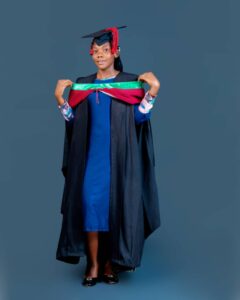 Bertha’s story
To-date, ACT, has supported just over 750 children across three regions in Tanzania through their education, enabling the children to persevere through difficult circumstances. This is especially important for girls, who face more barriers and are often overlooked in education. One of the many children ACT has supported in Tanzania is Bertha. Her story of resilience shows the importance of girls’ education and offers a beacon of hope for the future.
Bertha was born in 2000 in Kagera, Tanzania. She had a difficult child-hood, losing her father at a young age and being brought up alongside her two siblings by her mother. They faced economic hardship, struggling to pay for school supplies and basic items like food and clothing. This meant that the children regularly missed school. Like so many other girls in Tanzania, Bertha faced the possibility of dropping out of school and marrying young.
This changed in 2013 when ACT started supporting Bertha, meaning that she could continue her education. Because of her strong academic performance and perseverance, Bertha was enrolled in the Tobi Adeyemi Foundation (TAF) Scholarship programme. Bertha went on to study at the University of Dar es Salaam, receiving a bachelor’s degree in education.
Bertha expresses her deep gratitude to ACT for the significant support she received, especially as a girl, since many girls seem to be overlooked in education, and many of them appear to have lost hope. She is very proud and grateful to have reached this level of education and is looking forward to achieving her goal of becoming a teacher. It will give her great pleasure to give back to a new generation of children, providing them with the opportunity that ACT provided to her.
You can make a difference by supporting other young girls like Bertha
At ACT, we are dedicated to ensuring that every child, regardless of their circumstances, has access to a quality education. Your support can ensure that other girls like Bertha are able to have the best start in life. Click here to find out more about supporting a child.